
The Next.js host for the new era.
Run Next.js 16 on Cloudflare with best-in-class Next.js compatibility. PPR and Cache Components, built in.
99.90% of Next.js's own deployment test assertions pass on Arkor. See the results →
Public alpha · Next.js 16.3+
99.90% of Next.js's own deployment test assertions pass on Arkor.
Next.js compatibility: 16.3+, App Router and Pages Router
See the results →| Pages Router | RecommendedApp Router | |
|---|---|---|
| SSGStatic Site Generation | Supported | Supported |
| ISRIncremental Static Regeneration | Supported | Supported |
| PPRPartial Prerendering with Cache Components | Not available | Supported |
Compatibility results published by each project
Official sources checked on November 6, 2026
| Project / official source | Pass rate | Test scope / run time |
|---|---|---|
| Arkor | 99.90% | Next.js 16.4.5. 4,141 of 4,145 evaluated assertions passed. Run completed November 5, 2026, 15:27 JST. |
| Vercel | 99.83% | Next.js 16.4.5. Derived, not measured: the 4,145 assertions evaluated on Arkor, less the 7 that Next.js’s test source expects to fail on a Vercel deployment. |
| vinext | 95.69% | Next.js 16.2.6. Results from 799 test files are aggregated; pass rates use passed and failed test counts. Published result used: November 5, 2026, 11:15 JST. Empty tests registered for known skips are not counted: 2,398 passed, 108 failed. How this rate is derived |
| OpenNext Cloudflare | No official pass rate found | Cloudflare adapter. Its official documentation lists supported features; a comparable published pass rate could not be confirmed. |
Next.js versions, test scope, exclusions, and aggregation differ between projects. These are not results measured under identical conditions. Follow each link for official results or supported features.
Partial Prerendering: cached shell, streamed content.
A cached shell arrives first from Cloudflare’s CDN. Dynamic content follows as it becomes ready, in the same HTTP response.
Built for Cache Components in the App Router.
How PPR worksCDN (Cloudflare)
Cached shell
Dynamic content
Request-time content
One streamed HTTP response
Cached shell served first
Dynamic content streams as ready
Your visitor
No lock-in. Plain Next.js in, plain Next.js out.
Arkor builds standard Next.js through the official Adapter API. No Arkor package, no config file. @vercel/analytics, Speed Insights and vercel.json cron keep working. Try it on your own arkor.app URL while your domain stays where it is.
Moving from Vercel →Already on Vercel? See what you'd save.
Compare costsBuilt for coding agents.
Connect your coding agent through Arkor’s Remote MCP and Public API.
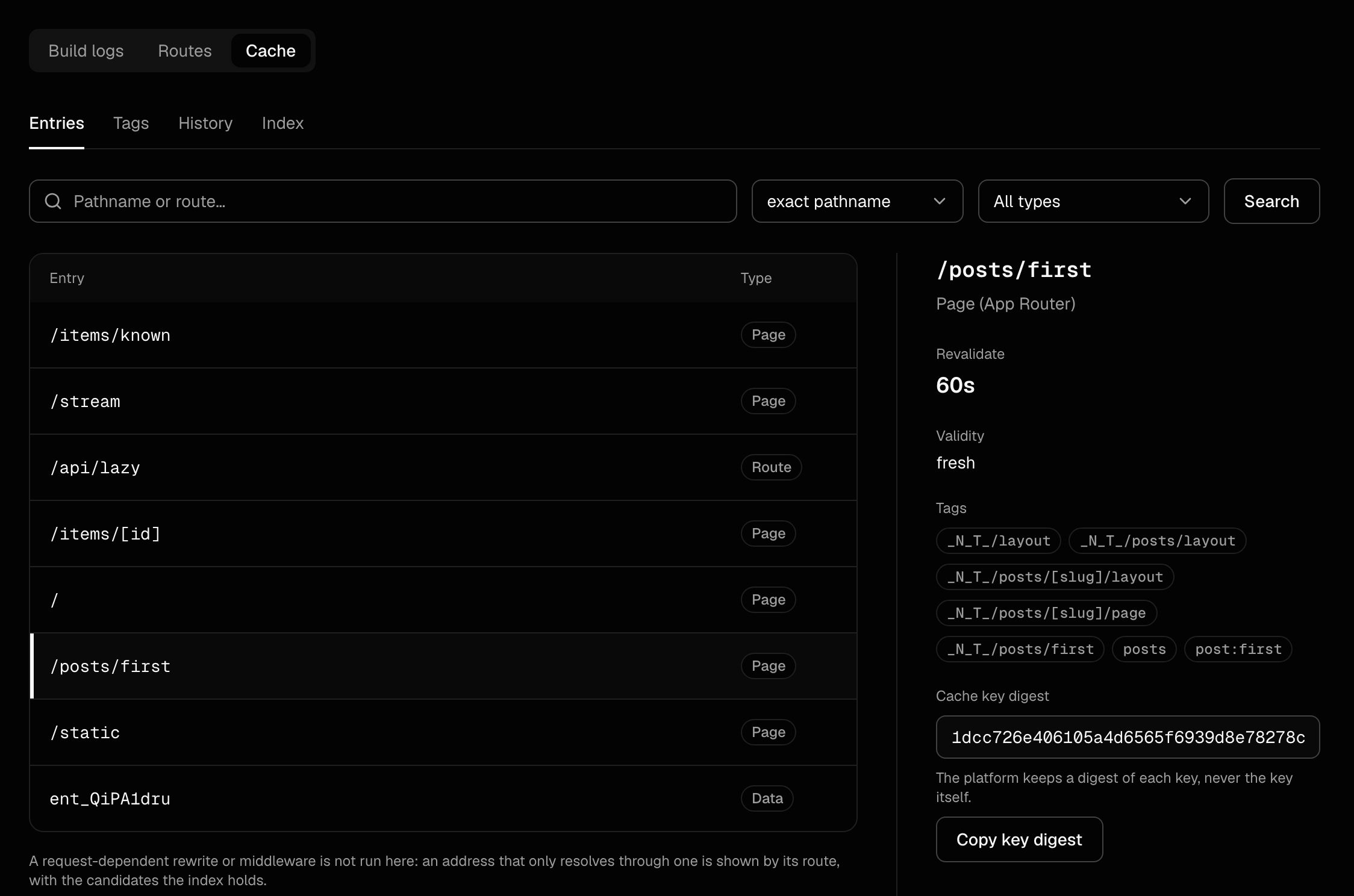
See why cached content changed with Cache Inspector
Inspect each runtime cache entry, the generation being served, and why it changed.
Explore Cache Inspector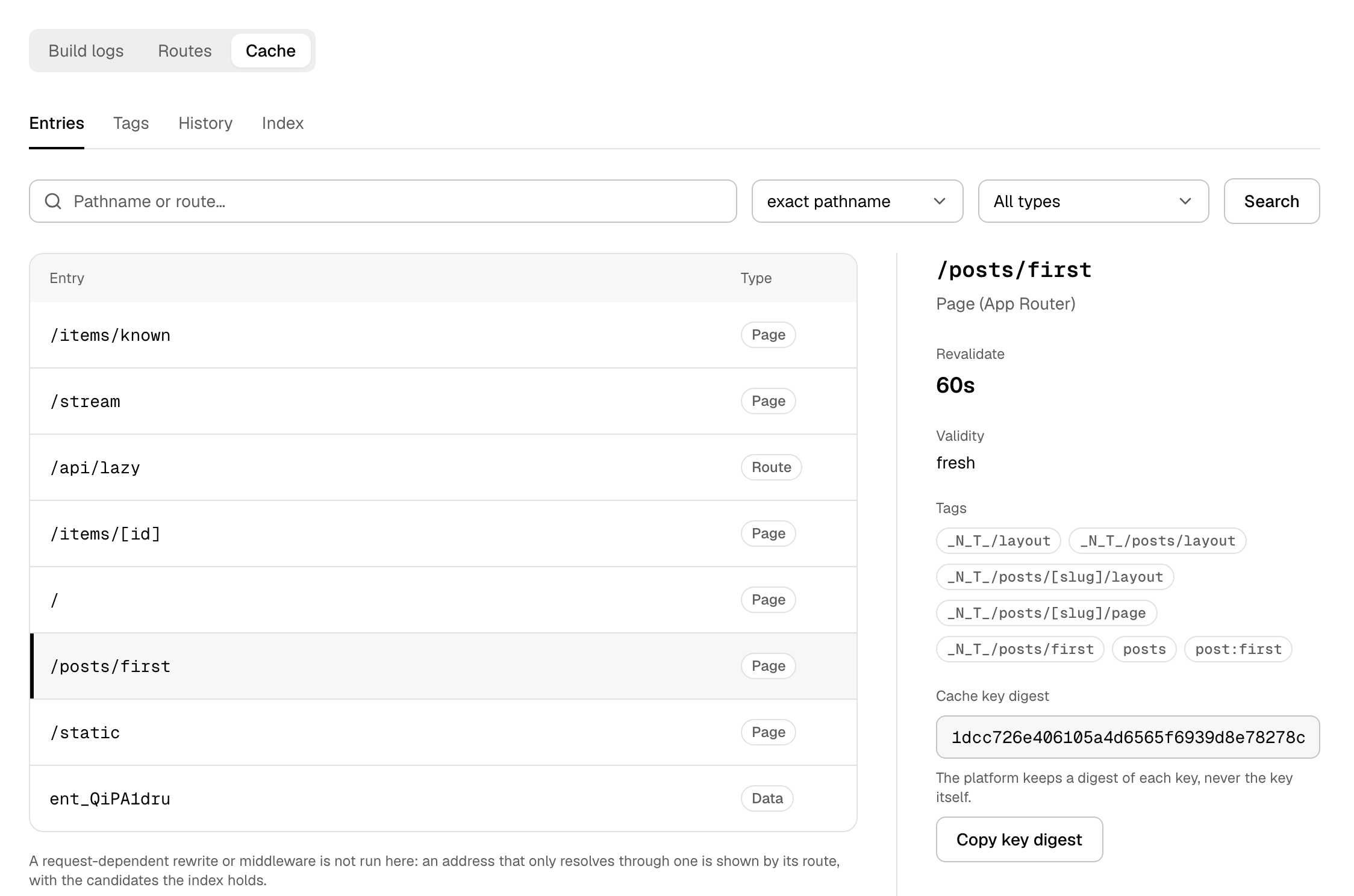
Pricing: free for your personal team, $20/month per team on Pro. No per-seat fees.
View pricingQuestions about Arkor
What is Arkor?
Arkor is managed Next.js hosting that serves each page’s cached shell from Cloudflare’s CDN and streams the dynamic parts. Built for Partial Prerendering and Cache Components, it supports Next.js 16.3+ and is in public alpha. Deploy from GitHub; each project gets its own arkor.app address.
Which Next.js versions does Arkor support?
Next.js 16.3+ is officially supported; 16.2 generally works but is not guaranteed. Builds use Turbopack. Webpack builds are not supported, except for static exports.
Does Partial Prerendering work on Arkor?
Yes. Arkor is built around Partial Prerendering with Cache Components in the App Router: the cached shell is served from Cloudflare’s CDN and the dynamic parts stream in the same response.
Do I need to change my code to try Arkor?
No Arkor dependency or configuration file is needed. Arkor builds the Next.js app you have. @vercel/analytics, @vercel/speed-insights and vercel.json cron jobs work without changes. Apps that use Arkor storage add @stayingupwind/sdk.
Can I try Arkor without moving off Vercel?
Yes. Test your app at its own arkor.app address while your current host continues serving production. Use a custom domain you own for production on Arkor, and move it only when you are ready.
How much does Arkor cost?
Your personal team is free, with no credit card: as a launch offer, $10 of usage is included every month (the standard amount is $5), and any change will be announced in advance. Once a month’s usage reaches it, its projects pause until the next month; nothing is charged. Any other team uses Pro, $20 a month per team with $20 of usage included. There are no per-seat fees. Usage beyond that is billed at the published rates. Data transfer, function invocations and image caching are free with no usage quotas. Cache Inspector is included in Pro. Enable recording per project; recorded writes use the Inspectable ISR Write rate.
Can I use Cloudflare KV, D1, R2 and Durable Objects?
Yes. A project can create KV namespaces, D1 databases and R2 buckets and use them with @stayingupwind/sdk. Register your SQLite Durable Object classes on the Bindings page; each environment gets its own namespaces. Storage and Durable Object usage are billed at Cloudflare’s rates. Existing resources cannot be migrated in, and bringing your own Cloudflare account is not supported.
How quickly do cache updates reach visitors?
Invalidations normally propagate within a few seconds, but a location can briefly serve its previous copy while checking. Time-based regeneration can take a minute or more to reach other regions; a data center may reuse its checked copy for up to about five minutes. Render data dynamically when it must be current on every request.
Is Arkor open source?
Arkor is a managed platform. Its Next.js adapter, upwind, is open source.
Why we’re building Arkor
We’ve explored web performance in our own projects, building on the work of Vercel and the Next.js community. Arkor turns what we’ve learned into tools for other developers.
We’re starting with cached delivery and tools to inspect and debug cache behavior. As Next.js evolves, we’ll keep helping developers put its new capabilities to work in production.


Hina & TaroCo-founders